Unique Aspects of Fabrication Welding Techniques
Metal fabrication welding plays a critical role in manufacturing processes across aerospace, automotive, medical, and industrial sectors. The precision and strength required in these industries demand specialized welding methods tailored to the unique properties of metals and the specific needs of each application. Understanding the distinct aspects of fabrication welding techniques helps manufacturers achieve consistent quality and reliability in their products.
Key Fabrication Welding Techniques
Fabrication welding involves several techniques, each suited to different metals, thicknesses, and design requirements. The most common methods include:
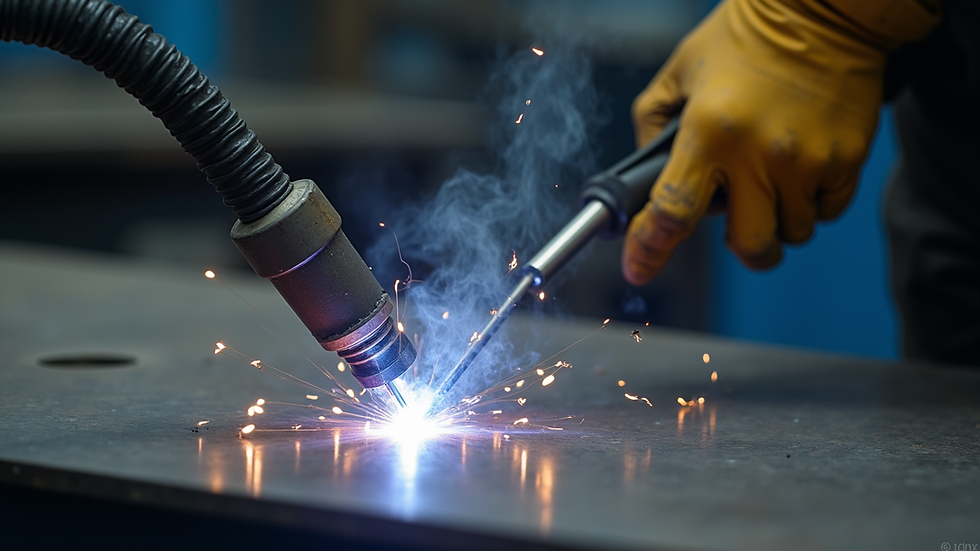
MIG Welding (Metal Inert Gas): Uses a continuous wire feed and inert gas to shield the weld. It is fast and suitable for thin to medium thickness metals.
TIG Welding (Tungsten Inert Gas): Employs a non-consumable tungsten electrode and inert gas. It offers precise control and produces clean, high-quality welds, ideal for thin metals and critical applications.
Stick Welding (Shielded Metal Arc Welding): Uses a consumable electrode coated in flux. It is versatile and effective for outdoor or heavy-duty work.
Flux-Cored Arc Welding (FCAW): Similar to MIG but uses a flux-filled wire. It works well for thicker materials and outdoor conditions.
Each technique requires specific equipment, skill levels, and preparation. Selecting the right method depends on the metal type, joint design, and performance requirements.
What is Metal Fabrication in Welding?
Metal fabrication in welding refers to the process of cutting, shaping, and assembling metal components through welding to create structures or parts. It involves several stages:
Design and Planning: Engineers develop detailed blueprints specifying dimensions, materials, and welding methods.
Cutting and Shaping: Metals are cut using laser, plasma, or mechanical tools to match design specifications.
Assembly: Components are positioned and temporarily fixed using clamps or tack welds.
Welding: Permanent joints are created using appropriate welding techniques.
Finishing: Welds are inspected, cleaned, and sometimes ground smooth for aesthetics or function.
This process demands precision and consistency to ensure structural integrity and compliance with industry standards. Fabricators must consider factors such as metal thickness, heat input, and distortion control during welding.
Material Considerations in Fabrication Welding
Different metals respond uniquely to welding. Understanding these responses is essential for successful fabrication:
Steel: Commonly used due to strength and weldability. Carbon content affects hardness and weld quality.
Aluminum: Lightweight but prone to oxidation. Requires clean surfaces and specific shielding gases.
Stainless Steel: Corrosion-resistant but sensitive to heat input. Proper technique prevents warping and maintains corrosion resistance.
Titanium: High strength-to-weight ratio but reactive at high temperatures. Requires inert gas shielding and controlled environments.
Each metal demands tailored welding parameters such as current, voltage, and travel speed. Improper settings can cause defects like cracks, porosity, or weak joints.

Challenges and Solutions in Fabrication Welding
Fabrication welding faces several challenges that can affect quality and efficiency:
Distortion and Warping: Heat from welding causes metal expansion and contraction. Using balanced weld sequences and clamps minimizes distortion.
Weld Defects: Porosity, cracks, and incomplete fusion reduce strength. Proper cleaning, correct parameters, and skilled operators prevent defects.
Material Compatibility: Joining dissimilar metals requires special techniques like bimetallic transition inserts or controlled heat input.
Inspection and Testing: Non-destructive testing methods such as ultrasonic or X-ray inspection ensure weld integrity without damaging parts.
Addressing these challenges requires a combination of experience, technology, and process control.
Enhancing Fabrication Welding for Industry Needs
To meet the demands of aerospace, automotive, medical, and industrial sectors, fabrication welding must evolve with technology and best practices:
Automation and Robotics: Automated welding systems improve repeatability and reduce human error. They are especially useful for high-volume production.
Advanced Materials: New alloys and composites require updated welding procedures and equipment.
Training and Certification: Skilled welders with certifications ensure adherence to industry standards and quality.
Process Monitoring: Real-time monitoring of welding parameters helps detect issues early and maintain consistency.
Manufacturers benefit from partnering with experienced fabricators who invest in these advancements to deliver reliable, high-quality welded components.
Fabrication welding techniques continue to develop, driven by the need for precision, strength, and efficiency. By understanding the unique aspects of welding processes and materials, manufacturers can optimize their production and maintain competitive advantages.
For more detailed information on metal fabrication welding, visit the Dasco Metal Fabrication website.
Future Directions in Fabrication Welding
The future of fabrication welding lies in integrating digital technologies and sustainable practices:
Digital Twins and Simulation: Virtual models predict welding outcomes and optimize parameters before actual production.
Additive Manufacturing Integration: Combining welding with 3D printing expands design possibilities.
Green Welding Practices: Reducing energy consumption and waste aligns with environmental goals.
Smart Welding Equipment: Sensors and AI enable adaptive control for improved quality.
Staying ahead in fabrication welding requires continuous learning and adaptation to new tools and methods. This approach ensures that manufacturers receive parts that meet stringent specifications and performance criteria.