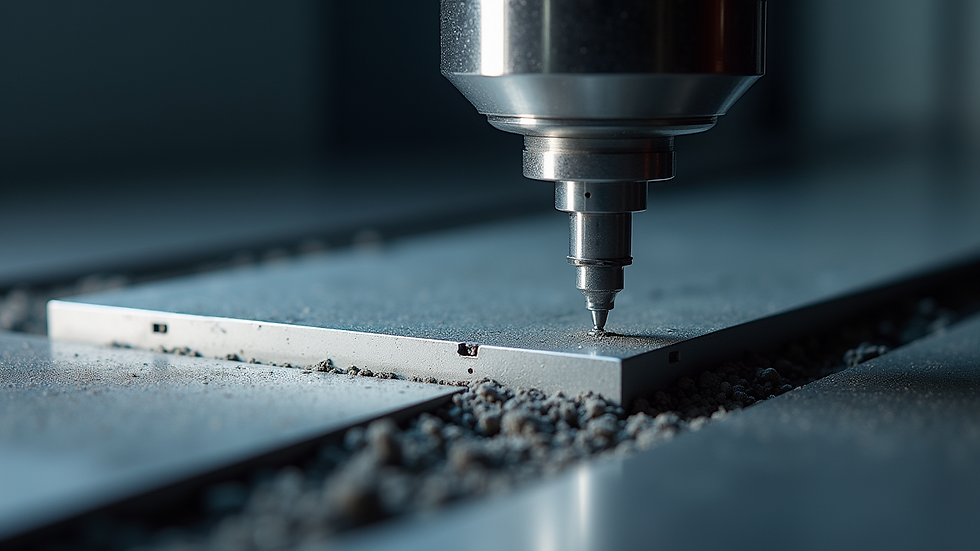
Innovations in Fabrication Design Innovations
Metal fabrication continues to evolve rapidly. New technologies and methods improve precision, efficiency, and product quality. These advances help manufacturers in aerospace, automotive, medical, and industrial sectors meet increasing demands. I explore key innovations shaping the future of fabrication design.
Emerging Fabrication Design Innovations
The fabrication industry adopts several innovations that transform how metal parts are designed and produced. Automation plays a major role. Robots and CNC machines handle complex tasks with high accuracy. This reduces human error and speeds up production.
Additive manufacturing, or 3D printing, allows for creating intricate metal components layer by layer. This method supports complex geometries that traditional subtractive methods cannot achieve. It also reduces material waste.
Digital twin technology creates virtual models of physical parts. Engineers simulate fabrication processes and identify potential issues before actual production. This saves time and lowers costs.
Advanced software tools improve design workflows. Parametric modeling and generative design enable engineers to optimize parts for strength, weight, and manufacturability. These tools integrate with manufacturing equipment for seamless transitions from design to production.

What is the thumb rule for sheet metal design?
Sheet metal design follows specific guidelines to ensure manufacturability and durability. One key thumb rule is to maintain minimum bend radii. Sharp bends can cause cracks or weaken the metal. The radius should be at least equal to the material thickness.
Another rule is to avoid excessively thin sections that may deform during fabrication. Uniform thickness helps maintain structural integrity. Designers also consider bend allowances and reliefs to prevent material distortion.
Proper hole placement is critical. Holes should be far enough from edges and bends to avoid tearing. Standard hole sizes and shapes simplify tooling and reduce costs.
Following these rules ensures parts are easier to fabricate and perform reliably in their applications.
Practical Applications of Fabrication Design Innovations
Manufacturers apply these innovations to improve product quality and reduce lead times. For example, aerospace companies use additive manufacturing to produce lightweight, complex engine components. This reduces fuel consumption and emissions.
In automotive production, robotic welding and laser cutting increase precision and consistency. This results in safer, more reliable vehicles. Medical device manufacturers benefit from digital twins to validate designs before costly prototyping.
Industrial equipment makers use generative design to create parts that optimize material use and strength. This lowers production costs and extends equipment lifespan.
To implement these innovations, companies invest in training and upgrade their equipment. Collaboration between design and manufacturing teams is essential to maximize benefits.

Challenges and Solutions in Adopting New Fabrication Technologies
Adopting new fabrication technologies presents challenges. High initial costs for equipment and software can be a barrier. Skilled labor is required to operate advanced machinery and interpret complex designs.
Data management becomes critical as digital tools generate large volumes of information. Companies must establish secure and efficient data workflows.
To overcome these challenges, manufacturers can:
Start with pilot projects to test new technologies.
Provide ongoing training for employees.
Partner with technology providers for support.
Implement robust data management systems.
Gradual integration allows companies to balance investment with operational needs while improving capabilities.
Future Trends in Metal Fabrication Design
Looking ahead, fabrication design will continue to benefit from digital transformation. Artificial intelligence will assist in design optimization and predictive maintenance. Smart factories will use interconnected machines to monitor and adjust processes in real time.
Sustainability will gain importance. Innovations will focus on reducing waste, recycling materials, and lowering energy consumption. Lightweight materials and hybrid fabrication methods will become more common.
Customization and small-batch production will grow. Flexible manufacturing systems will enable rapid changes to designs and production runs.
Manufacturers who embrace these trends will enhance their competitiveness and meet evolving market demands.
Enhancing Precision and Responsiveness in Fabrication
To serve more manufacturers effectively, companies must focus on precision and responsiveness. Advanced fabrication design innovations enable tighter tolerances and faster turnaround times.
Investing in state-of-the-art equipment and skilled personnel is essential. Maintaining open communication with clients ensures designs meet exact specifications and deadlines.
Continuous improvement through feedback and technology upgrades strengthens reputation and expands market reach.
By integrating these practices, fabrication providers can become trusted partners for precision metal fabrication across regions.
For more information on how these innovations impact the industry, explore the latest in metal fabrication design.