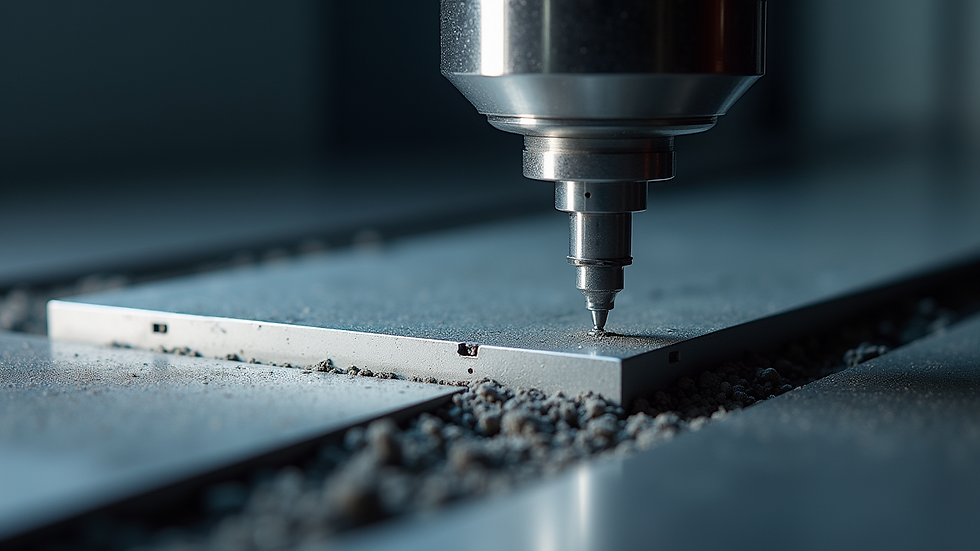
The Sheet Metal Fabrication Process
Sheet metal fabrication plays a critical role in manufacturing for aerospace, automotive, medical, and industrial sectors. It involves transforming flat sheets of metal into precise, functional parts. I will walk you through the key steps of the sheet metal fabrication process, explaining each stage clearly and practically. This knowledge helps in understanding how quality metal components come to life and what to expect when working with a fabricator.
Understanding the Sheet Metal Fabrication Process
The sheet metal fabrication process starts with raw metal sheets. These sheets can be made from various metals such as steel, aluminum, copper, or brass. The choice depends on the application requirements like strength, weight, and corrosion resistance.
The process includes several stages:
Design and Engineering - The first step is creating detailed drawings or CAD models. These designs specify dimensions, tolerances, and material types. Precision here ensures the final product meets exact specifications.
Cutting - The metal sheets are cut into the required shapes and sizes. Common cutting methods include laser cutting, plasma cutting, waterjet cutting, and shearing. Laser cutting offers high precision and clean edges, ideal for complex shapes.
Forming - After cutting, the metal pieces undergo forming processes to achieve the desired shape. This includes bending, rolling, and stamping. Press brakes are often used for bending, applying force to shape the metal without breaking it.
Joining - Fabricated parts may need to be joined together. Welding, riveting, and fastening are common methods. Welding fuses metal parts permanently, while riveting and fastening allow for disassembly if needed.
Finishing - The final step involves surface treatments such as painting, powder coating, or plating. These finishes protect the metal from corrosion and improve appearance.
Each step requires specialized equipment and skilled operators to maintain quality and efficiency.

Key Techniques in the Sheet Metal Fabrication Process
Several techniques define the sheet metal fabrication process. Understanding these helps in selecting the right approach for a project.
Laser Cutting: Uses a focused laser beam to cut metal with high accuracy. It produces smooth edges and minimal waste. Suitable for intricate designs and thin to medium thickness sheets.
Waterjet Cutting: Employs high-pressure water mixed with abrasive particles to cut metal. It does not generate heat, preventing material distortion. Ideal for heat-sensitive metals.
Press Braking: Bends metal sheets by pressing them between a punch and die. It allows for precise angle control and is widely used for creating bends and folds.
Stamping: Uses a die to punch or form shapes in metal sheets. It is efficient for high-volume production of parts with consistent shapes.
Welding: Joins metal parts by melting and fusing them. Common welding types include MIG, TIG, and spot welding. Each has specific applications depending on metal type and thickness.
Powder Coating: Applies a dry powder to the metal surface, which is then cured under heat. This creates a durable, corrosion-resistant finish.
These techniques combine to produce parts that meet strict industry standards.
What Services Does Metal Fabrication Include?
Metal fabrication services cover a broad range of capabilities beyond basic cutting and forming. These services ensure that manufacturers receive ready-to-use components tailored to their needs.
Prototyping: Creating initial samples to test design concepts and fit before full production.
CNC Machining: Computer-controlled cutting and shaping for high precision and repeatability.
Assembly: Combining multiple fabricated parts into subassemblies or complete products.
Quality Control: Inspection and testing to verify dimensions, strength, and finish meet specifications.
Custom Finishing: Applying specialized coatings, anodizing, or plating for enhanced performance.
Logistics and Packaging: Preparing parts for safe transport and delivery.
These services streamline production and reduce the need for additional processing steps.

Choosing the Right Materials for Fabrication
Material selection is crucial in the sheet metal fabrication process. It affects the strength, weight, corrosion resistance, and cost of the final product.
Steel: Offers high strength and durability. Commonly used in automotive and industrial applications. It can be carbon steel or stainless steel, with stainless providing better corrosion resistance.
Aluminum: Lightweight and corrosion-resistant. Preferred in aerospace and medical sectors where weight reduction is critical.
Copper and Brass: Used for electrical components and decorative parts due to excellent conductivity and appearance.
Titanium: Strong and lightweight with excellent corrosion resistance. Used in aerospace and medical implants but is more expensive.
Understanding the properties of each metal helps in making informed decisions that balance performance and cost.
Improving Efficiency in Sheet Metal Fabrication
Efficiency in the sheet metal fabrication process reduces lead times and costs. Here are practical ways to improve it:
Design for Manufacturability: Simplify designs to minimize complex cuts and bends. Avoid tight tolerances where not necessary.
Use Advanced Equipment: Invest in CNC machines and automated cutting tools to increase precision and speed.
Optimize Material Usage: Nest parts closely during cutting to reduce scrap metal.
Implement Quality Checks Early: Detect defects early in the process to avoid costly rework.
Train Skilled Operators: Skilled workers reduce errors and improve throughput.
By focusing on these areas, manufacturers can enhance productivity and maintain high quality.
Partnering for Precision and Quality
Selecting a reliable partner for sheet metal fabrication is essential. A fabricator with advanced capabilities and a strong reputation ensures consistent quality and responsiveness. I recommend considering providers who offer comprehensive sheet metal fabrication services and have experience serving aerospace, automotive, medical, and industrial sectors.
Such partners understand the critical nature of precision and deadlines. They invest in technology and skilled personnel to meet demanding specifications. This collaboration supports your manufacturing goals and helps maintain competitive advantage.
Sheet metal fabrication is a complex but well-defined process. From design to finishing, each step requires attention to detail and expertise. By understanding the process and working with capable fabricators, manufacturers can produce high-quality metal components that meet stringent industry standards.