Innovations in Fabrication Design Innovations
Metal fabrication continues to evolve rapidly. New technologies and methods improve precision, efficiency, and product quality. These advances impact industries such as aerospace, automotive, medical, and industrial manufacturing. I explore key innovations shaping the future of fabrication design and how they benefit manufacturers.
Key Fabrication Design Innovations Transforming Manufacturing
Fabrication design innovations focus on enhancing production speed, reducing waste, and increasing accuracy. Automation plays a central role. Robotics and computer numerical control (CNC) machines handle complex tasks with minimal human intervention. This reduces errors and improves repeatability.
Additive manufacturing, or 3D printing, integrates with traditional fabrication methods. It allows for rapid prototyping and production of complex geometries that were previously impossible or costly to produce. This hybrid approach accelerates product development cycles.
Advanced software tools enable precise simulation and modeling of metal parts before fabrication. Designers can test stress points, thermal effects, and assembly fit virtually. This reduces costly physical trials and shortens time to market.
Materials science innovations also contribute. New alloys and composites offer improved strength-to-weight ratios and corrosion resistance. These materials require updated fabrication techniques, driving further innovation.

Robotic welding improves precision and consistency in metal fabrication.
What is the thumb rule for sheet metal design?
Sheet metal design follows several practical guidelines to ensure manufacturability and durability. One key thumb rule is to maintain minimum bend radii that match the material thickness. This prevents cracking and deformation during bending.
Another rule is to avoid sharp internal corners. Rounded corners reduce stress concentration and improve part strength. Designers should also consider material grain direction to optimize bending and forming.
Hole sizes and spacing must accommodate tooling capabilities. Too small or closely spaced holes can cause tearing or distortion. Standardizing hole sizes simplifies tooling and reduces costs.
Flat patterns should minimize scrap material. Nesting software helps arrange parts efficiently on sheet metal to reduce waste. Designers should also plan for allowances such as bend relief and flange lengths.
Following these rules ensures parts are easier to fabricate, assemble, and perform reliably in service.
Integration of Automation and Robotics in Fabrication
Automation transforms fabrication by increasing throughput and consistency. CNC machines execute cutting, bending, and welding with high precision. Robots handle repetitive or hazardous tasks, improving safety and reducing labor costs.
Automated material handling systems streamline workflows. Conveyors and robotic arms move parts between stations without manual intervention. This reduces cycle times and bottlenecks.
Machine learning algorithms optimize machine parameters in real time. They adjust cutting speeds and tool paths based on sensor feedback to maximize quality and tool life.
For manufacturers, investing in automation means faster turnaround and higher quality products. It also enables scaling production to meet demand without compromising standards.

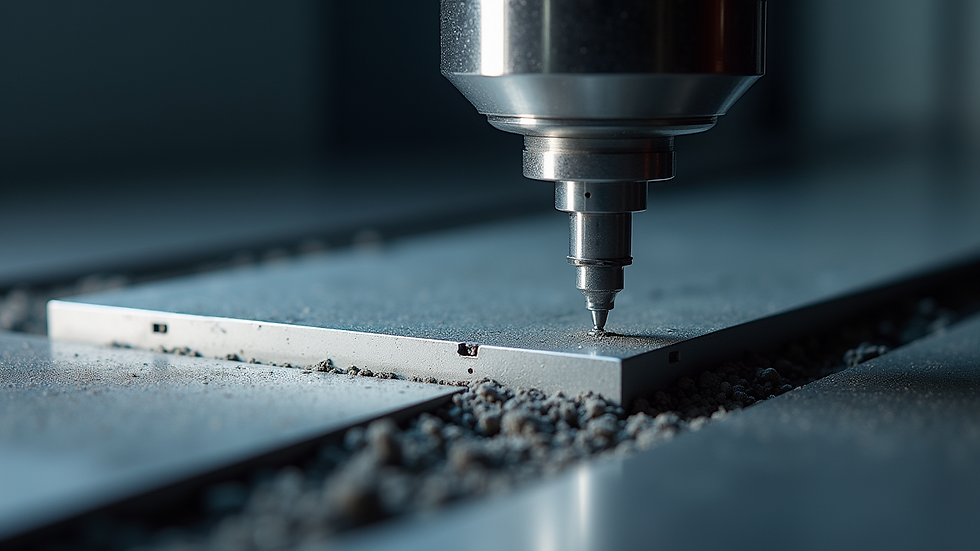
CNC machining delivers precise cuts and shapes in metal fabrication.
Advanced Materials and Their Impact on Fabrication Techniques
New materials challenge traditional fabrication methods. High-strength alloys and lightweight composites require specialized cutting, welding, and forming processes.
For example, titanium alloys used in aerospace demand precise temperature control during welding to avoid brittleness. Composites may require hybrid joining techniques combining adhesives and mechanical fasteners.
Material innovations also drive the adoption of laser cutting and waterjet technologies. These methods provide clean cuts with minimal heat-affected zones, preserving material properties.
Manufacturers must stay informed about material developments and adapt their fabrication processes accordingly. This ensures parts meet performance requirements while maintaining cost efficiency.
Software and Digital Tools Enhancing Fabrication Design
Digital tools revolutionize how fabrication design is approached. Computer-aided design (CAD) software allows detailed 3D modeling of parts and assemblies. Designers can simulate manufacturing steps and identify potential issues early.
Finite element analysis (FEA) predicts how parts will respond to forces and stresses. This helps optimize designs for durability and weight reduction.
Manufacturing execution systems (MES) track production in real time. They provide data on machine status, quality metrics, and inventory levels. This visibility enables proactive decision-making and continuous improvement.
Cloud-based collaboration platforms facilitate communication between design, engineering, and production teams. This reduces errors caused by miscommunication and accelerates project timelines.
Preparing for the Future of Metal Fabrication
The future of metal fabrication design lies in continuous innovation and integration of new technologies. Manufacturers must invest in training and equipment to stay competitive.
Embracing automation, advanced materials, and digital tools improves efficiency and product quality. It also enables rapid response to changing market demands.
I recommend evaluating current fabrication workflows and identifying areas where new technologies can add value. Partnering with experienced fabricators who prioritize innovation ensures access to the latest capabilities.
By adopting these innovations, manufacturers can enhance their production processes and deliver superior products consistently.
This overview highlights how fabrication design innovations reshape manufacturing. Staying informed and adaptable is essential to leverage these advances effectively. The integration of robotics, advanced materials, and digital tools creates new opportunities for precision and efficiency in metal fabrication.
For more detailed insights on metal fabrication design, exploring specialized resources and industry case studies is beneficial.