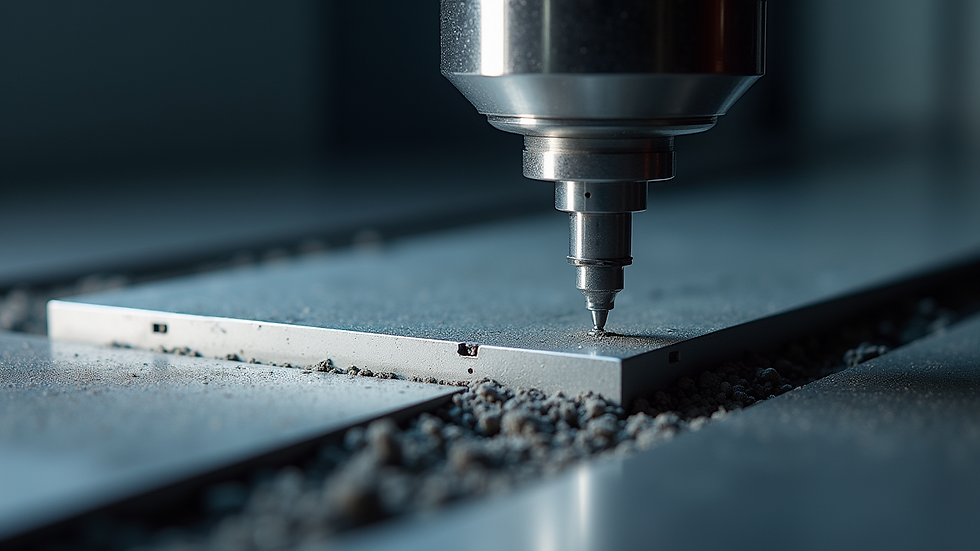
Achieve Precision with Precision CNC Machining Benefits
In manufacturing, precision defines quality. Achieving exact dimensions and tight tolerances is critical in aerospace, automotive, medical, and industrial sectors. Precision CNC machining delivers this accuracy consistently. It transforms raw materials into complex parts with minimal error. I will explain how precision CNC machining benefits your production, the factors influencing costs, and how to optimize your processes.
Understanding Precision CNC Machining Benefits
Precision CNC machining uses computer numerical control to automate machine tools. This automation ensures repeatability and accuracy beyond manual methods. The benefits include:
Consistent Quality: CNC machines follow programmed instructions exactly. This reduces human error and variation between parts.
Complex Geometries: CNC machines can create intricate shapes that are difficult or impossible with manual machining.
Material Efficiency: Precise cutting reduces waste and optimizes material use.
Speed and Productivity: Automated processes run faster and can operate continuously with minimal supervision.
Flexibility: CNC programs can be quickly adjusted for design changes or different parts.
For example, aerospace components require tight tolerances to ensure safety and performance. Precision CNC machining meets these demands by producing parts with micron-level accuracy. Similarly, medical devices benefit from the ability to machine small, detailed parts reliably.

Key Factors Affecting Precision in CNC Machining
Achieving precision depends on several factors:
Machine Quality and Maintenance
High-quality CNC machines with regular maintenance maintain accuracy. Worn tools or misaligned components cause errors.
Tool Selection and Condition
Using the correct cutting tools and replacing them before wear affects precision. Dull tools produce rough surfaces and dimensional inaccuracies.
Programming Accuracy
The CNC program must be carefully written and tested. Errors in code translate directly into part defects.
Material Properties
Different materials respond differently to machining. Harder materials require slower cutting speeds and more robust tools.
Environmental Control
Temperature and humidity can affect machine calibration and material behavior. Controlled environments improve repeatability.
Operator Skill
Skilled operators monitor the process, adjust parameters, and troubleshoot issues to maintain precision.
By focusing on these factors, manufacturers can maximize the benefits of precision CNC machining and reduce scrap rates.
How much to charge for CNC machining?
Pricing CNC machining services depends on multiple variables. Understanding these helps set competitive and profitable rates.
Setup Time: Programming, tooling, and machine setup require labor hours. Complex parts increase setup time.
Machine Time: The actual cutting time depends on part complexity, material hardness, and machining speed.
Material Costs: Raw material price varies widely. Some metals like titanium or specialty alloys cost more.
Labor Costs: Skilled operators and programmers add to the cost.
Overhead: Facility costs, maintenance, and utilities factor into pricing.
Quantity: Larger production runs reduce per-part cost due to amortized setup.
A common pricing model combines a fixed setup fee plus a variable rate per machine hour. For example:
| Cost Component | Example Rate |
|----------------|----------------------|
| Setup Fee | $150 - $500 |
| Machine Hour | $75 - $150 per hour |
| Material | Market price per lb |
To price accurately, analyze the part design, material, and production volume. Use software tools or consult with experienced machinists to estimate machining time. Transparent pricing builds trust with clients and supports long-term partnerships.
Best Practices to Maximize Precision and Efficiency
To fully leverage precision CNC machining benefits, implement these best practices:
Design for Manufacturability
Simplify part geometry where possible. Avoid features that require excessive tool changes or complex setups.
Use High-Quality Materials
Select materials with consistent properties and minimal impurities to reduce machining variability.
Regular Machine Calibration
Schedule routine calibration and maintenance to keep machines within tolerance.
Invest in Skilled Personnel
Train operators and programmers on the latest CNC technologies and quality standards.
Implement Quality Control
Use in-process inspection tools like coordinate measuring machines (CMM) to verify dimensions during production.
Optimize Tool Paths
Use CAM software to generate efficient tool paths that minimize tool wear and cycle time.
Maintain Clean Work Environment
Remove chips and debris promptly to prevent damage and maintain accuracy.
Following these steps reduces errors, improves throughput, and enhances product quality.

Expanding Capabilities for Regional Manufacturing Needs
Manufacturers in the Southeastern U.S. require reliable partners for precision metal fabrication. Expanding advanced CNC machining capabilities supports this demand. By investing in state-of-the-art equipment and skilled teams, fabricators can serve aerospace, automotive, medical, and industrial clients more effectively.
Offering a broad range of services, including milling, turning, and multi-axis machining, enables handling diverse projects. Responsiveness to design changes and quick turnaround times strengthen client relationships. Maintaining a reputation for quality and precision builds trust and repeat business.
For manufacturers seeking dependable cnc machining services, partnering with a provider focused on precision and customer service is essential. This approach supports growth and competitiveness in demanding markets.
Moving Forward with Precision CNC Machining
Precision CNC machining is a cornerstone of modern manufacturing. It delivers consistent quality, complex part production, and efficient use of materials. Understanding the factors that affect precision and pricing helps optimize operations. Implementing best practices ensures maximum benefit from CNC technology.
Expanding capabilities and maintaining high standards positions fabricators as trusted partners for manufacturers across sectors. Precision machining is not just a process - it is a strategic advantage in producing reliable, high-quality components.
By focusing on precision and responsiveness, manufacturers can meet stringent industry requirements and drive innovation. Precision CNC machining services remain vital to achieving these goals.